Sunday, January 24, 2016

5 Ways to Eat and Yet be Able to Lower Your Cholesterol (What Indian foods to eat to Lower Cholesterol levels?)


What Indian foods to eat to reduce cholesterol? 

"You are what you eat"-you probably have heard your doctor tell you this umpteen number of times. Well, it is true. Sadly, today we 'eat what our taste buds like' rather than 'eat what the body needs'. This results in a number of lifestyle diseases like obesity, heart diseases, type 2 diabetes, hypertension or strokes. 
Hyperlipidaemia or elevated lipid (fat) levels which was seen more in people over the age of 40, is now commonly seen in younger age groups and even some obese kids in the urban areas. This is something that can be easily prevented and/or reversed by eating a healthy balanced diet and plenty of physical activity.
What foods to eat to reduce cholesterol? This is one of  the two questions that I am asked the most (the other being  "What to eat to reduce weight?") by those whose cholesterol levels are higher than normal. Most people that I have counselled have been able to reduce their cholesterol levels by just eating the right foods and choosing to do some kind of exercise on a regular basis. Here are 4 simple tips to follow if you want to lower your cholesterol through your diet:
What Indian foods to eat to reduce cholesterol? 

1)Eat your sabzi and phal (veggies and fruit): Your mom was right-all those years of nagging you to eat your vegetables and fruits and see what happens when you stop? That's right-all the bhindi (okra), beans(green beans), gobi(cabbage), phool gobi (cauliflower),kaddu (pumpkin),karela(bitter gourd) basically all veggies are good for you so long as you don't overcook them or drown them in oil. 
Why?Fruits and vegetables both contain loads of vitamins, minerals, are low in calories and have the most important nutrient for reducing cholesterol- fibre. Soluble fibre has long been known to lower the bad cholesterol (LDL) levels, among other benefits. So make sure you eat a variety of vegetables that are in season.
How much to eat? At least one cup of sabzi (cooked veggies) and a salad at every meal and two fruits(not juice) a day. 
2)Switch to whole grains: If you've been eating white rice, white bread, maida(refined flour), instant oats then it's time to switch over to brown/red rice or parboiled rice, whole wheat bread, whole wheat flour, dalia (broken wheat), regular/rolled or steel cut oats and whole wheat pasta. Try including new whole grains like , barley, quinoa (pronounced keen-wah), ragi/nachni (a staple in the Southern states like Karnataka, AP). 
Why? Researchers have noticed a significantly lower risk of chronic heart disease (CHD) in those who consume whole grains on a regular basis. Again whole grains contain nutrients like minerals, antioxidants, lignans other phytochemicals and fibre that are lost when they are refined or processed by humans to increase the shelf life or to cook faster. In the process of saving time and money we end up with a product which has very few nutrients. Moreover the fibre in whole grains tends to fill you up and you end up eating less foods which means you get fewer calories.
How much to eat? Controlling portion sizes as suggested by your dietitian is very important.You'll soon realize that you not only eat less, but also don't feel hungry because of the fibre, which is actually a good thing. 
3)Limit bad fats: Unhealthy or bad fats like butter, ghee, vanaspati(trans-fat) and full fat milk and milk products need to be avoided or taken in restricted amounts. Switch to cold pressed oils which are made without chemicals or heat whenever possible. These include extra virgin olive, peanut, sunflower, sesame oils that are cold pressed. The second choice would be olive, canola, sesame, sunflower, peanut oil for cooking and canola oil for baking.
Why? The bad fats can increase your cholesterol and over a period of time clog your arteries. Good fats like omega 3's on the other hand can do the opposite and reduce the risk of heart disease.
How much to eat? Just enough. Though they may be termed as good fats, they still have the same calories as the bad fat. That means if your food is swimming in 'good oil' it still can't be good for your body.
4)Include Omega 3 rich foods: There are two varieties of Omega 3: seafood that provide EPA (Eicosapentoenoic acid) and DHA (Docosahexaenoic acid) and plant based foods that provide ALA (Alphalinolenic acid) .Oily fish like sardines (Tarle in Marathi, Kavala in Telugu, Mathi in Malayalam), Mackerel (Bangade in Kannada, Marathi, Aiyla in Malayalam), Salmon, tuna, anchovies(Bolenjaru in Kannada/Tulu, Natholi in Malayalam) are rich in EPA.  Vegetarians can choose from plant based APA rich foods like flaxseeds (Alsi in hindi/marathi, agase beeja in Kannada), walnuts (akharot in hindi), canola and soy oil, soybeans, soy nuggets, soy milk and tofu. Green leafy vegetables and omega 3 eggs (eggs from chickens fed a omega rich diet) also contain smaller amounts of omega 3.
Why? EPA and DHA have shown to reduce triglycerides, blood pressure and plaque buildup. In addition they could also reduce inflammation, the risk of strokes and certain cancers. ALA on the other hand needs to be converted to EPA and DHA in the body and researchers believe that this reduces the amount of omega 3 that is available. 
How much to eat? Include oily fish in your diet at least twice a week but make sure that you don't deep fry them. Fish curries, steamed fish or even grilled/baked fish will give you the most health benefits. Fish oil capsules are a great alternative for people who may not be able to eat fish on a regular basis. The vegetarian sources can be included on a daily basis.
5)Eat to live: You don't have to change your diet completely. Include foods that are good for you and remove foods that you know are unhealthy.  Get a dietitian to plan a diet keeping your likes and dislikes in mind. Your chances of sticking to a diet that is planned for you is much more than one that your neighbour is following!
Why? Because years of regularly eating the unhealthy foods are showing in your health reports and it's a signal to change.
How much to eat? Everything in moderation is the mantra. Too much of even the good foods can be bad sometimes-so try not to go overboard and stick to portion sizes.

For help in custom planning an Indian diet for lowering cholesterol-check out my 'Healthy Heart Packages: Heart Healthy Diet Plans

What Indian foods to eat to reduce cholesterol? 

How to Keep Food Safe During a Power Outage


It's bad enough being stuck in a snow storm, tornado or cyclone but to have a power outage along with that is like putting salt on your wounds. People are usually well prepared to face a storm with extra food, water, flashlights, candles but they often tend to forget about the food kept in the fridge and freezer.
While non-perishable foods will keep well when left outside, the perishable foods like milk, cheese, poultry, meat and left overs will become a breeding ground for pathogens if it is kept above 4C (40F) for more than 2 hours. To prevent food borne diseases follow these simple tips:
1) When you get to know about the storm or blizzard make sure to set your fridge at it's coldest setting.
2) Move all the perishables like milk, and leftovers to the back of the fridge or into the freezer.
3)Keep coolers, ice packs and extra ice blocks ready .
4)During the power outage stack the food closer to each other both in the fridge and the freezer. Closely packed food tend to keep cold longer.
5)Keep meat,poultry on trays or ziplock pouches in the freezer to avoid the drippings from contaminating other foods in case it does thaw out.
6)Keep the fridge and freezer doors closed to keep the cold trapped inside.
7)If the power outage is for more than 4 hours, then put the ice-blocks into the coolers and move the food into that.
Keep in mind that without power the fridge will keep cold for just 4 hours while the freezer (if it is full) will most likely keep for about 48 hours.
Discard any food that has been stored above 40F (or 4C) for more than two hours. If the food smells bad, has changed in colour, texture or if you simply are in doubt-then throw it away. Better to be safe than sorry.


Sunday, January 10, 2016

Indians and the Risks of Consuming a High Sugar Diet

Sugar is present in a variety of foods not just sweets

A spoonful of sugar........makes the calories sit on your waist!! Are you noticing that you are slowly gaining weight even though you aren't eating junk food? Sugar might be the culprit.Have you ever given a thought to how much sugar you consume in a day?
We Indians consume way too much sugar every day without realizing the health problems associated with it. The general mindset is "eat and drink today for we are healthy" as a result of which tomorrow you will end up with a host of health problems!
Many of us associate sugar control to diabetes and believe that if they are not diabetic then they do not need to keep a watch on the sugar intake. This is not true. Diabetics definitely need to be more cautious as it tends to increase their blood glucose levels but non-diabetics also need to curb excessive sugar consumption.
This brings us to the question: Is sugar such a terrible food that we need to take it in limited amounts? The answer is that anything in excess is not good.
Here's what you need to know about sugar:

  • Nutritionally the only thing you get when you eat sugar is just calories (1 tsp/5g of sugar=19 calories). It has no other nutrients unlike a nutrient dense food like say for example nuts. Nuts will give you protein, minerals, vitamins, fibre and good fats (polyunsaturated) along with calories. These kind of foods are called nutrient-rich foods whereas candy and sugar are classified as nutrient poor foods.
  • More often than not, we tend to choose a sugary snack or drink instead of a fruit or other healthy foods and end up piling up on calories. This can lead to  dental caries and weight gain, which then increases the risk for other health problems like certain cancers, heart disease, and diabetes among others.Considering that Indians are at a greater risk of developing diabetes, this higher consumption combined with the resulting weight gain could trigger it off at a much earlier age. 
  • Eating a sugary snack fills you up for that moment, but since there isn't much fibre you end up feeling hungry again. This results in another snack which just increases your calorie count without offering your body other nutrients.
Most people feel that they don't eat too much because they rarely add sugar to anything. But what they don't realize is that while they might not add sugar into foods, they do have foods that already have sugar. Everyday foods and drinks like tea,coffee, biscuits, juice, soft drinks, breakfast cereals, jams, ketchup, ice creams, cakes and other sweets all have sugar. What we don't realize is the amount of sugar in these-a can of soft drink/aerated drink easily contains 8-10 teaspoons, while your tea or coffee can have anything to 3-4 teaspoons. Add these through the day and you could easily be having anywhere close to 20-25 teaspoons per day!! That's a whole lot.
Should we avoid sugar completely or is there a cut-off range? How much sugar?
While there is no need to completely avoid sugar, there is no safe range either. The WHO (World Health Organisation) and the American Heart Association recommend limiting sugar intake to:
Men= 9 teaspoons or less
Women= 6 teaspoons or less
Children:
Preschoolers= 3 teaspoons
4-8 years= 4 teaspoons
9-Teenagers=5-6 teaspoons

How much sugar do you consume? Keep a note-if it is over the recommendations, then you need to reduce it.

Thursday, January 7, 2016

Which is the BEST day to check your weight?

How Weekends may be the Key Factor in making you Lose or Gain weight

Do you get depressed at seeing your weight fluctuate every day? Don't panic-it's just a pretty normal phenomenon.
Researchers have now found out that the body goes through a weight cycle. This weight loss cycle or weekly weight rhythms is somewhat similar to the REM cycles (Rapid Eye Movement) during sleep. Researchers from Cornell University along with VTT Research Centre of Finland looked into what a seven-day-a week human cycle has on their weights.
They found a definite pattern in weight gain and weight loss according to the day of the week .Not surprisingly, the most weight gain among the participants was seen on Sunday and Monday. After that the weight tapered down to the lowest being on Fridays!
This only goes to prove that weight fluctuations through the week is a normal phenomenon among everyone and there is no need to panic.
Which is the BEST day to check your weight?
For weight watchers this is a also a good point to keep in mind and instead of checking weight every single day, to just check on one particular day of the week. The best day would be Friday-so keep Fridays as your weight check days.

Tuesday, January 5, 2016

Lifestyle changes may help women with Gestational Diabetes


Diet and Lifestyle changes for Gestational Diabetics 
Women who have Gestational Diabetes (diabetes that occurs during their pregnancy) have been known to be at risk for diabetes later in their life. Now a new study done at 22 Kaiser Permanente mediclinics on gestational diabetics post pregnancy suggests that with proper lifestyle changes and a good weight management program they may just be able to prevent diabetes from occurring later on.
If you have or had Gestational Diabetes, it is important for you to follow a strict diet and physical activity routine not just during pregnancy but also after delivery.
With Indians known to be more at risk for diabetes and the unhealthy eating patterns that urban Indian tend to follow diabetes could be knocking at your door even before you expect. Don't wait for your that to happen and then look for a diet and lifestyle change. Get healthy now and you could just prevent diabetes from happening to you.
Here's are 3 simple steps to a new healthy you (Both during and post-pregnancy)
1)Eat right-don't overeat, you don't really need to eat for two. You just need to eat the right foods in the right amount.
2)Be active: Unless your doctor has put you on bed rest, there is no reason why you cannot be active. The least you can do is walk everyday.
3)Drink lots of fluids: The last thing you want is to be constipated. Both pregnancy and lactation requires increased fluid intake and what drink can be better than water.

Check out our Women's Health Packages that can be tailor-made keeping you, your health problems and you eating habits in mind: Women's Health Packages at myindiandietitian.com


How to lose 1 pound (half a kg) of body weight every week by eating a Healthy Indian Diet


Are you planning on turning a new leaf this New Year? Are you looking forward to discovering the new Healthy You? If you've tried it every year and given up at the end of January-then trust me, there's NOTHING wrong with you! It's just that you haven't found the right way to get healthy. This year, take the right steps, do the right things and make this the "Year Of the New You".
Here are 9 simple steps to start off:
  1. Get up and move: Choose and start a physical activity or fitness program that you enjoy. It could be as simple as a brisk walk, a jog, aerobics, gym workout or a sport. Ideally something that keeps you on your toes for at least an hour every day. 'Sitting is the new smoking' these days-so keep moving! Your new mantra should be 'Calories in and Calories out'-burn out the calories that you eat!
  2. Detox or declutter your kitchen pantry: Remove all the chips, bhujias, ghatias, sweets,cakes, chocolates and all the unhealthy foods from your fridge and pantry. It's going to be out with the old and in with the new foods this year! If there are no tempting foods in your reach, you will end up not eating them.
  3. Stock up with 'real food': Once you have all the high-calories and ready to eat processed foods out of the house, buy lots of fruits, vegetables and ingredients that you need to make dishes from scratch.
  4. Always include a vegetable and a protein source: Make sure you eat at least one vegetable (more is better) at every meal and add some protein to add satiety. Protein foods keep you full for a longer period of time and the vegetable will reduce the amount of grain/cereal you have. Examples: Upma with vegetables and curd, poha with vegetables and curd, sambar with vegetables. If you can't add a vegetable-then add a fruit.
  5. Avoid sugary drinks and sweets: A little bit of halwa, a little bit of chocolate, a little bit of ice cream, a little bit of soft drink makes you pack on the pounds! 
  6. Buy a water bottle: Yes, that's right-a water bottle. Most of us forget to drink water through the day. Buy a big 1 litre water bottle (BPA free) and fill it up. Take it with you and you'll never have to buy packaged water or soft drinks when you feel thirsty. Make sure you drink two bottles of water by the end of the day.
  7. Set timings for your meals: Don't eat whenever you feel hungry-set regular meal timings. This helps in getting into a regular meal pattern and also does away with hunger attacks. This will reduce cravings and binge eating.
  8. Eat dinner two hours before bedtime: Eating too close to bedtime is a definite no-no! It not only interferes with your sleep pattern, but also makes you sluggish and susceptible to heart burn (acid reflux) in the night.
  9. Get eight hours of sleep: Researchers have now found a link between a lack of sleep and obesity. This is one simple thing which will go a long way in your journey of a new healthy you.
Once you have mastered these seven steps, then you can take the next most important step-find the right diet plan which has been tailor made for YOU. Check out this article- How To Choose the Right Indian Diet Plan for a Healthy Weight loss?

Also check out my website and pick a package that is suitable for you: My Indian Dietitian

Monday, January 4, 2016

How to Choose the Right Indian Diet Plan for Healthy Weight Loss?

Have you made your New Year's resolution to lose weight and are looking for the right Indian Diet plan for healthy weight loss? Then here is the checklist of what you should look for before signing up for it.

  1. Do they plan Indian Diet Plans for Healthy weight loss? This is most important especially if you are living outside India. If you sign up without finding this out you will be stuck with a fantastic diet plan or package but which is of no use for you since the foods are all Western! Let's face it-we may live abroad, love the Western lifestyle and the amenities that is offered there, but at the end of the day, we still want to eat our 'desi khaana". Akhir dil hain Hindustani!! 
  2. Is there a real dietitian or are you expected to interact with a computer? No really-think about it!! Why pay for a computer generated diet chart?
  3. Check the credentials of the person: With every Tom,Dick and Harry giving out diet advice these days, you need to be careful about who you sign up with. Look for a qualified dietitian who has worked at least a couple of years in a hospital. Most dietitians who have worked in a hospital know the dangers of crash dieting and are vary about prescribing the same to clients.
  4. Do they recommend fad diets? Some websites push fad diets (fruit diet, juice diet, GM diet,Cabbage diet ) to show immediate results. But remember-these results don't last. Not only that, there is a danger of nutritional deficiencies and severe hair loss after sometime. Do you really want that? Or would do you want something that helps you keep the weight off forever? It's your choice-but it's your body that will pay for what you choose!
  5. Are the Indian Diets planned for you or are they chosen from previously printed plans? Diets need to be planned, not printed off the internet. It's like going to the doctor and getting a check-up and by google. Would you really do that? You want something that is specific to you-one size does not fit all in the case of diets!! So don't be fooled by websites who take money to dole out pre-planned diet charts.
  6. Will the weight loss Indian diet be planned according to your eating habits? Again what's the point of eating something which you are not used to eating? For example-if you are a South Indian and the diet planned is a typically North Indian diet. It's just not right for you. 
  7. Will there be follow-ups? You need to have your diet reviewed basically to see how you are doing on it and if any changes are required.
If this is exactly what you want, then do get intouch with me to schedule an appointment as the first step to a new, heathy, YOU!!
 Click to go to choose the right Indian Diet Plan for Healthy weight loss: My Indian Dietitian


6 Healthier, Lighter Recipes of Your Favourite Indian Foods

Indian food has some of the most sinfully delicious dishes that it makes you crave for more. Most of these dishes are so rich that it makes you feel sluggish for the rest of the day. So what if you could make lighter and healthier versions of the same dishes which you could enjoy and still go about your day without feeling guilty.
Here are some healthy Indian food recipes that you can try out and enjoy (portion control is still a must). (Click on the name of the recipe to go to the page)
1)Healthy Palak Paneer recipe: Make it a low-calorie version, but don't compromise on the taste by using low-fat milk and wholewheat flour (atta) to make it creamy. You can substitute the paneer with tofu, chickpeas or even chicken. Enjoy this with some hot phulkas or rice and dal.
2) Healthy Dal Makhani recipe: The makhani in this title is misleading as there is absolutely no makkhan (butter), no cream used in this recipe. Just removing that brings down the net calories in this recipe-and the low-fat milk adds the creaminess to the dish. Enjoy this with a plate of rice ,a side of veggies and some salad.
3)Healthy Chicken Biryani recipe: A healthier version of the delicious Indian Chicken Biryani made by using very little oil and some mixed veggies to increase the vegetable and fibre intake. If veggies in your biryani isn't your cup of tea-then you could always avoid them, but we are thinking about health here people!! 
4)Healthy Kotthu Paratha recipe: Yes, you can make this healthy by using your regular phulkas (wholewheat/Atta) instead of the parathas made with maida and oodles of butter and oil! Once mixed with the chicken/egg you honestly won't know that it is a healthier version of the Kotthu Paratha.
5)Healthy Ragda Patties/ Healthy Alu tikki chaat recipe: Use rava/semolina to coat the tikki/patties and shallow fry or bake the tikkis. The rava ensures that the tikki doesn't absorb oil like those made with bread crumbs.
6) Healthy Tandoori chicken recipe/ Healthy tandoori fish recipe: Tandoori food should actually be healthy as they are baked. By not using oil and food colour in the marinade, it actually becomes all the more healthy.
Remember that too much of even the healthy foods can be bad for you. If you are interested in knowing how to get an Indian Weight Loss Diet chart do contact me an we can work on a tailor-made diet chart for you. Check out my Website: http://myindiandietitian.com/

Sunday, December 27, 2015

Whole Wheat Crêpes with Fresh Peach and Strawberry filling (How to make whole wheat crepes)(How to make fresh peach,strawberry filling for crepes)

Healthy eating is all about eating in moderation, and what is life without a touch of sweetness? Treat your kids to the occasional desserts, but make it a tad healthier by using fresh and less processed foods. Learn how you can add more fibre to your crepes by using whole wheat flour (regular chapathi/roti atta). Using fresh fruits like strawberries, peaches, blackberries or raspberries instead of jams or preserves also increases it's nutritional value.

How to make whole wheat crepes
Ingredients for the crepes: (Makes approx 10-12)
  • Whole wheat flour (atta)- 1 cup
  • Eggs-3 nos.
  • Milk- 1 cup,
  • Water- 1 cup
  • Honey/ jaggery- 1 tbsp
  • Cardamom- 2-3 (remove the skin)
  • Salt- a pinch
  • Oil- 1 tbsp
Method:
  • Put all the ingredients in a blender and blend till you get a pouring consistency. 
  • Let it rest for 15-20 mins. In the meanwhile you can make the filling.
Ingredients for filling:
  • Peaches/strawberry/blackberry/blueberry- 500gms 
  • Lemon juice- 2tsp
  • Honey- 1-2 tsp
Method:
  1. Wash the fruit well. If using peaches, remove the skin and then slice into thin slivers. Strawberries need to be hulled and sliced into slivers.
  2. Put the fruit into a microwave safe bowl and microwave for 1-1.5 mins. 
  3. Remove add the lemon juice, honey and mix well. Keep aside.
Making the crepes:
  1. Heat a pan, add a teaspoon of oil and spread it around the pan.
  2. Pour a ladle full of the batter and swirl the pan to spread the batter (do not spread it with the ladle like dosas),
  3. Cover and cook on medium flame for about 2-3 mins till golden brown. Then flip it over to cook on the other side( be careful not to break it since they are very thin).
  4. Cook for another 2 mins, then slide onto a plate.
  5. Spoon out the filling into the centre and cover it with the two ends of the crepe or roll the crepe (whichever is easier).
  6. Serve with a dollop of yogurt or fresh cream or maple syrup.
How to make Whole Wheat crêpe
Watch your kids devour the Whole Wheat Crepes with fresh peach and strawberry filling! Bon appetite!

Thursday, September 10, 2015

It's Time to Spring Clean........Your Diet!!!

Spring is in the air and that means it’s time to clean up…your diet!! That’s right,it’s high time you took charge of your health and got it back on the right track by making little changes in the way you eat and of course by being more active. To know more check out my article published in an Australian Magazine called Indus Age:


Thursday, August 27, 2015

Pump Up Your Iron Consumption!

My article on iron published in the Times of India's Indiatimes website:
Have you been feeling tired, fatigued, weak, dizzy or breathless too easily of late? It could be possible that you are not getting enough iron in your diet! Read more at: 
Pump Up Your Iron Consumption!

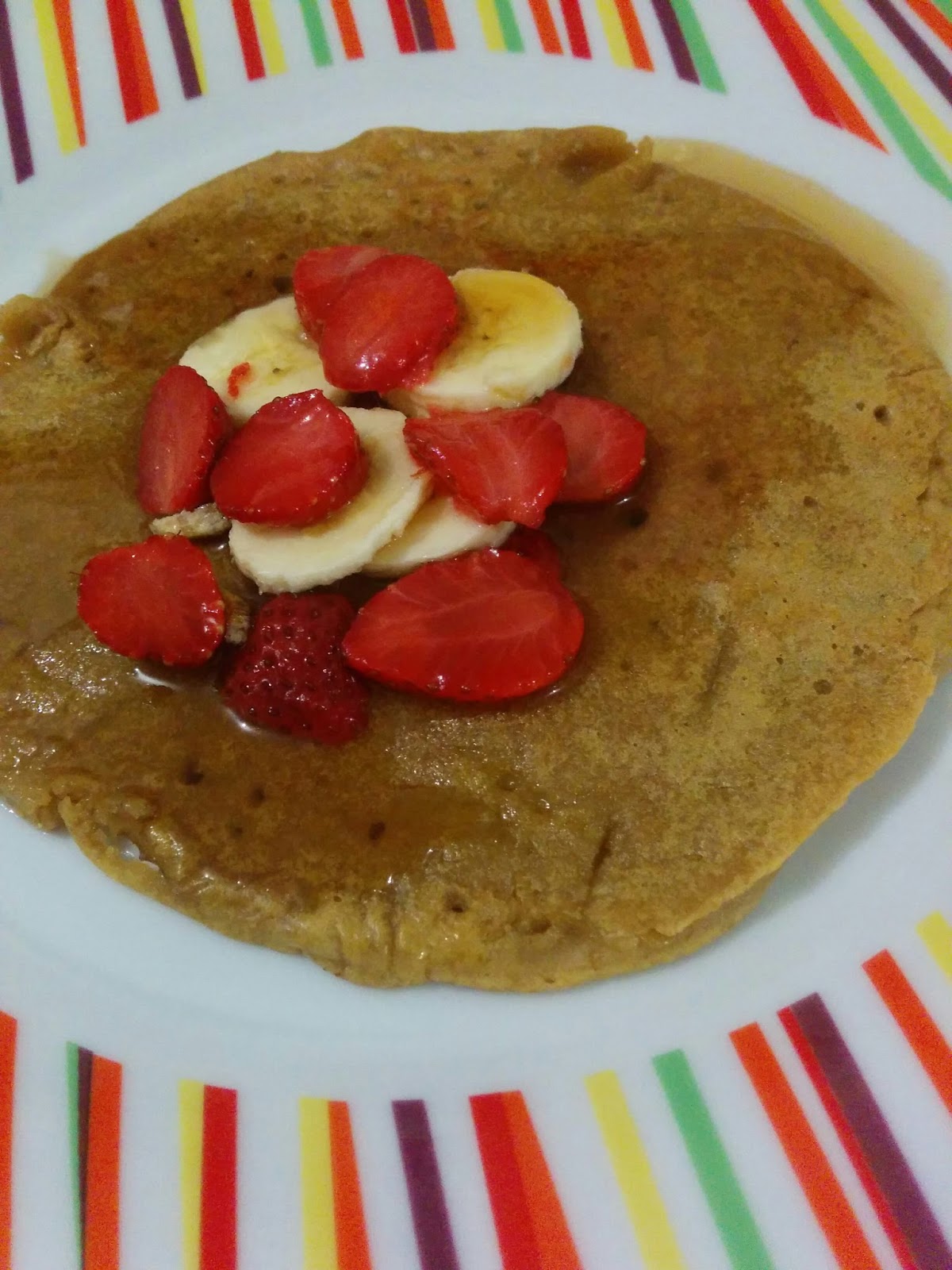
Instant Whole Wheat Sweet Banana Dosa (How to make banana dosa) Whole Wheat Banana Pancakes with jaggery (How to make Whole Wheat Banana Pancakes),

How to make instant whole wheat sweet banana dosa/ pancakes? It's easy and simple. All you need are some really ripe bananas, some whole wheat flour (atta), jaggery and milk. These whole wheat banana pancakes make a healthier option for kids and can be served both as a snack or as a breakfast item. Since jaggery is already added to the batter, they are naturally sweet and don't actually require any syrup while serving. You could just serve them with some freshly cut fruits. These instant whole wheat banana dosas are great when you want to make a quick snack or breakfast.
Whole Wheat Banana Pancakes
Ingredients:
Ripe Banana- 1 no.
Whole wheat flour (atta) - 1 cup,
Jaggery- 3/4cup (or to taste)
Skimmed milk- 1 cup
Salt- a pinch
Cardamom- 2-3 pods (remove the skin)
Soda bicarbonate-1 tsp (optional)
To serve:(optional)
Banana/strawberry-half cup sliced (to garnish)
Maple syrup


Method:
1) Add all the ingredients (except the soda bicarbonate) to a blender and blend till you get a fine batter (if required add more milk to get a batter consistency).
2) Pour the batter into a bowl. Add the soda bicarbonate (optional) if you like fluffy pancakes. Mix well.
3)Heat a non-stick pan, add a little oil. When hot, pour a ladle full of batter to the centre of the pan.
4)Cover a cook for a minute or two( do not try to spread it like a dosa).If you have added soda bicarbonate, the pancakes will get bubbles (holes) on top.
5)Flip and cook on the other side till done.
6) Serve hot as such or with some maple syrup/ jam, sliced fruits like banana, strawberry, mango.
Instant Whole Wheat Banana Dosa


Monday, August 3, 2015

How to gain weight in a healthy way?


For those who are underweight (BMI < 18.5*), gaining weight can be as hard as losing weight. Being skinny has its own set of health problems ranging from weaker immune systems (making them prone to infections, surgical complications) and slower recovery times for illness. They also tend to have low muscle mass, and less than ideal hair, teeth, and skin composition. They may have disruptions in the ability to regulate hormones and protect bone health, and women could become unable to menstruate
Gaining weight should be a safe process and takes a lot of time and effort. The best way to gain weight without becoming fat and gaining extra harmful calories is to follow a healthy balanced diet, along with workouts and weightlifting/strength training exercises.
The notion that ‘skinny’ or ‘underweight’ people can eat high calorie foods (like chips, cakes, pizzas, cookies, etc) without it adversely affecting their health is wrong. Poor diets can lead to ailments such as heart disease, stroke, and cancer. Plus, people who gain weight eating anything and everything tend to retain it as fat, and in much more undesirable places.
Here are some healthy ways to add extra calories to your daily diet:
  • Eat more frequently: Eat five to six small meals throughout the day rather than two or three large meals.
  • Eat nutrient-rich foods: As part of an overall healthy diet, choose whole-grain breads, pastas and cereals; fruits and vegetables; low-fat dairy products; lean protein sources (like egg whites, chicken, fish, soy and soy products, legumes and pulses); and nuts, seeds and dry fruits.
  • Watch what you drink: Don't fill up on diet soda, coffee, tea and other drinks with few calories and little nutritional value. Instead, drink smoothies or healthy shakes made with milk and fresh or frozen juice and sprinkle in some ground flaxseed. Drink fluids either 30 minutes before or after a meal, not with it, to avoid becoming full before you eat.
  • Add in calorie-dense snacks: Choose calorie-dense foods, such as nuts, dhoklas, idli with sambar, upma with vegetables, usal/ shundal (steamed pulses with a little tadka/seasoning) cheese, paneer, dried fruits, bananas, avocados, figs. Also, have a bedtime snack, such as an omelet/cheese/ paneer sandwich, or a sandwich with banana and honey, or a cup of curd with chopped fruits and honey.
  • Mix it up: Add cheese/skim milk powder to soups, scrambled eggs, curries. Add pulses/legumes to dishes like vegetable pulav’s, poha’s, and even to regular sabzi’s (e.g. try adding kabuli channa to the cabbage sabzi/ sprouted moong to aloo matter,etc).
  • Have a sweet treat: But be sure to select sweets that also provide nutrients, such as yogurt/curd with fruits/ dry fruits, groundnut chikki’s and milk based sweets like kheer, peda’s, rosugullas, rasmalai .

Besides eating, exercise, especially strength training, can also help you gain weight by building up your muscles and adding more "bulk" to your body. It may also stimulate your appetite and help you eat a little more. Remember that it can take a while to gain the weight you need, but be patient and continue to choose healthy foods until you reach your goal weight. Once you reach your goal, the next step would be to maintain that weight with regular exercise otherwise you could end up being overweight.
[* Body Mass Index (BMI) = weight in kg / height in meters2
If the BMI is:
(Note: The BMI for Indians/South Asians is different from the western population).
1. Equal to or less than 18.5 = Underweight
2. between 19-22 = Normal
3. between 23-25= Overweight
4. 26 and above = Obese ]

Summer Fun- Mango Granita

With the mango season just around the corner-here is a simple dessert for those days when you want to have something ‘icy’!
Ingredients:
Mango-3 cups cubed
Water-1 cup
Sugar- 1 tbsp. (can be omitted if the mangoes are very sweet)
Rose petals- for garnish
Method:
Blend the mangoes, water and sugar in a blender and blend till smooth(add more water if it is too thick)
Pour onto a large, flat baking tray and freeze for about an hour.
After that, take it out and run a fork along the sides of the container to break up large chunks of ice. Repeat this process for every hour till you have a grainy texture.
Freeze again till serving time. When serving, fork out the portions into a small bowl, top with a rose petal and serve immediately.
Note: You can add a little ginger for variation.

Watermelon Granita

Beat the HEAT with Granita
Granita is a kind of semi-frozen Italian dessert more like a grainy slushie or sorbet. It is a simple, refreshing and exotic sounding dessert which is bound to impress everyone. Simple, as it usually consists of not more than 3 ingredients and refreshing, as it mainly consists of water, which is perfect on a hot summer’s day.
Watermelon Granita: (serves 8)
Ingredients:
Watermelon: ½ (deseeded and cubed)
Lime juice: 1 tbsp
Sugar: 5tsp
Mint leaves: for garnish
Method:
Blend the watermelon, sugar and lime juice till you get a smooth puree.
Take a wide pan or baking tray and pour the puree, cover and freeze for about an hour and a half.
Take a fork and stir the frozen mixture, breaking any frozen pieces.
Take it out and again scrape with the fork making small icicles when you do so.
Cover tightly and freeze till you need it.
When serving, scrape with a fork and place the icicles into a small bowl.

Can your breakfast cereal provide you with antioxidants?

Can your breakfast cereal provide you with antioxidants?

That’s right-your bowl of cereal has a lot more nutrition than you knew. A recent study aimed at studying the anti-oxidant content of some of the popular breakfast cereals and whole grain snacks revealed that raisin bran cereals and popcorns contained a large amount of polyphenols.
Polyphenols are chemical substances that act like antioxidants and have been known to protect against health problems like cancer, heart problems and even prevent aging by removing free radicals from the body.

The study which was conducted by Dr. Joe Vinson at the University of Scranton in Pennsylvania adds a new dimension to the benefits of whole grains. Whole grains were always known to be beneficial due to its fiber content, but the discovery of polyphenols greatly increases its nutritional value.
The researchers also pointed out that the polyphenol value increased with the addition of polyphenol-rich ingredients such as raisins and cocoa to the breakfast cereals. The study also concluded that among the whole-grain snacks, popcorn topped the list in having the highest amount of polyphenols.
Though this gives us more reason to reach out for whole-grain cereals and snacks, a general word of cautionsince some of these products can be high in terms of sugar(e.g.: breakfast cereals), fat and salt content (e.g.: popcorns).
A few tips while buying packaged product
  • The best thing to do is to check the labels.
  • Choose cereals that have whole grains instead of refined.
  • Buy cereals with less or no added sugars and sweeten your bowl of cereals with fresh/dried fruits.
  • As far as popcorns are concerned, buying the corn kernels and popping them at home with a little oil and a dash of salt would be a better idea than buying the readymade microwavable sachets.

Are Frozen Foods good for you?

Are Frozen Foods good for you?
March is 'Frozen Food Month'! Like most people, I had no clue that there was such a month as “Frozen Food Month” (definitely frozen food manufactures have something to do with this)! Anyway, we were grocery shopping and a poster for the same caught my eye. Although I’m not for frozen ready-made/ready to eat food as it has way too much sodium and preservatives, I am a regular visitor to the frozen veggie aisle.
Frozen fruits and veggies are according to me a life saver for working men and women! Washing,cutting and cooking veggies take time and that’s where these frozen veggies come handy since they are already cleaned and cut.
Nutritionally too, frozen veggies have the same nutrition as fresh vegetables and fruits. Some scientists feel that frozen fruits and vegetables are more nutritious than fresh foods as they are picked, cleaned, cut and frozen immediately after harvesting. Compare this to the amount of time it takes for the fresh veggies to be picked, packed, sent to the different parts of the country before it reaches a sabziwala(vegetable vendor) or sabzimandi or bazaar near you. Even after that, it’s probably sitting on the cart/refrigerated shelf for some time before you pick (and put in the fridge) and it gets eaten!

The advantages of frozen veggies and fruit:

  • Easy, convenient and saves a lot of time (can you think of the amount of time saved peeling fresh peas)!
  • Sometimes frozen veggies or fruits can be cheaper when the fresh vegetable is not in season.
  • Similar in nutritional content as fresh veggies/fruits.
I always have a packet of frozen mixed veggies which has green beans, carrots, green peas and corn-I usually use this in pulav’s, upma, khichdi, poha, biryani and even in pasta and noodles! Frozen berries and mangoes are great to use in smoothies and milkshakes.
You can also make your own frozen vegs/fruit packets-buy in bulk when in season, portion out and freeze. 

What kind of frozen foods do you pick up?


Healthy Diet During Ramzan

How to Eat Healthy During Ramzan?

The Muslim Holy month of Ramadan (or ‘Ramzan’ in India) is the important month of the Islamic calendar, when Muslims fast during daylight hours.
Those who are physically able to, are required to fast each day of the entire month, from sunrise to sunset.  

Here are some tips for eating healthy during Ramzan:

  • During Suhur/Suhoor (pre-dawn meal): switch to complex carbohydrates like brown rice (parboiled rice/semi-polished rice), whole wheat breads/atta/pasta as these take time to be digested and hence will keep you feeling full for a longer period of time.
  • To avoid acidity: Eat foods rich in fiber like vegetables, fruits, whole pulses/legumes. Avoid coffee, spicy and fried foods as these tend to increase the gastric secretion that can irritate the lining of the stomach.
  • To avoid weight gain: Avoid fried foods like namkeens (chivda/mixtures/sev/ghatia), samosa, fried chicken, fried fish, sweets,pastries, chocolates, desserts, biryani (on a daily basis), ghee, butter.
  • To avoid dehydration: Between Iftar and Suhur, drink loads of water, tender coconut water, lemonade, buttermilk/chaas and also eat fruits and vegetables that contain a lot of water/moisture like watermelon, muskmelon, pineapple, cucumber, all gourds (like bottle gourd, turrai, ash gourd).
  • Choose healthy methods of cooking: Opt for grilled/baked non-veg instead of fried.
  • Instead of high calorie desserts: Opt for fresh fruits on a daily basis, these not only have less calories but will also provide you with the all-important fiber and water.

For those who are looking out to eat healthy during Ramzan, here is a sample Indian diet that is balanced and does not go overboard as far as calories are concerned:

Breaking the fast (at sunset): Dates + Water

Iftar is the Dinner - the meal which ends the day's fast. Options you can consider for dinner meals -
Option 1: Rice with Gajar Methi sabzi along with Masoor Dal and a piece of Tandoori Chicken along with Cucumber and Tomato salad with a glass of Buttermilk/Chaas. A bowl of watermelon.
At Bedtime: Skimmed milk.
Option 2: Phulkas with Baingan Bhartha and Channa Masala along with Grilled Chicken Kabab and Mixed veg raita. A bowl Muskmelon.
At Bedtime: Buttermilk.
Option 3: Rice with Fish curry and Cabbage and Peas sabzi along with Chickpea Salad with peppers and tomatoes. A bowl of Pineapple.
At Bedtime: Ragi malt.
Suhoor is the meal eaten pre-dawn before the day begins for fasting. Options you can consider for your early morning meal :
Option 1: Veg Daliya Khichidi with Kadi and Stir fry mix veggies with a piece of Grilled chicken and Carrot and Mint salad. A bowl of Papaya.
Option 2: Brown or Semi-polished rice with Beetroot Sabzi and Radish Sambar with Mixed Veg Salad and a glass of Buttermilk. A bowl of Strawberry.
Option 3: Jowar Roti with Bhindi Sabzi and Chicken Curry with Mint Raita and Tender Coconut Water. A bowl of Banana.
Eating healthy through Ramzan will not only be easy on your stomach but will also make sure that you don’t put on unnecessary weight during the month. Keep the feasting and all the yummy biryanis and kheer’s for Eid-after all, everyone deserves to indulge in some feasting after a month of fasting!